Acres of Asphalt: How Minimum Parking Requirements Are Quietly Killing Transit Ridership
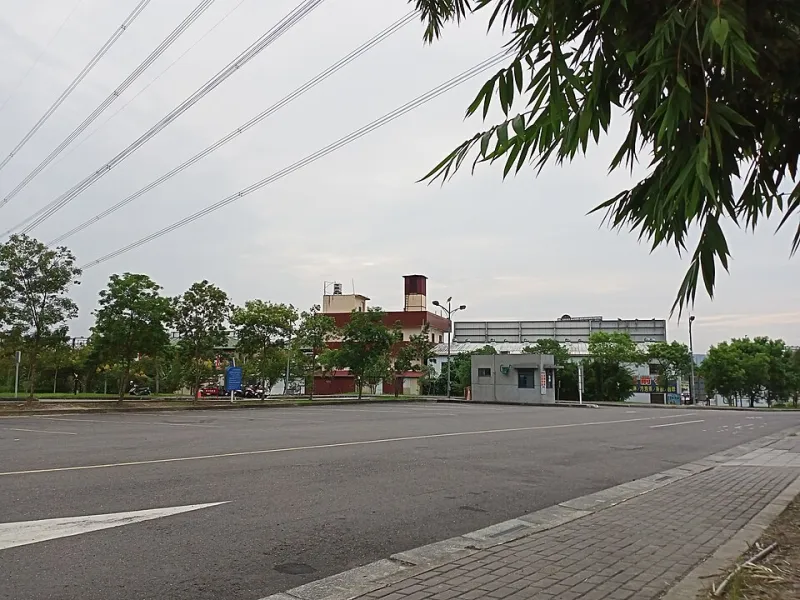
Photo: Kai3952, CC BY-SA 4.0, via Wikimedia Commons
For decades, the parking space has occupied a peculiar position in American urban planning: invisible when present, infuriating when absent. Municipalities across the country have written minimum parking requirements into their zoning codes with little public debate, treating them as a neutral technical standard rather than a policy choice with measurable consequences. That assumption is now under serious scrutiny — and the data connecting parking mandates to suppressed transit ridership is becoming difficult to ignore.
The Price Embedded in Every Space
Building a surface parking space in an American city typically costs between $5,000 and $10,000. A structured parking garage space can run $25,000 to $50,000 or more, depending on land values and construction costs. Developers do not absorb these expenses. They pass them along — bundled into rents, folded into home sale prices, and distributed across every unit in a building regardless of whether the occupant owns a car.
A 2020 study published in the Journal of the American Planning Association estimated that parking requirements add between $1,700 and $34,000 per unit to the cost of multifamily housing, depending on local land prices and the number of spaces mandated. In high-cost metros like San Francisco, Seattle, and Washington, D.C., those figures tilt toward the upper end. The practical effect is that even a household committed to transit use is effectively taxed for car infrastructure it does not need — and in many cases, that tax is large enough to push car-free living out of financial reach entirely.
This is not an abstract policy concern. When housing near transit corridors carries a cost premium driven partly by mandatory parking construction, lower- and middle-income households — the demographic most likely to depend on transit — are priced out of the neighborhoods where transit works best.
Minneapolis and the Post-Minimum Experiment
In 2021, Minneapolis eliminated parking minimums citywide, becoming one of the largest American cities to do so. The decision came packaged with broader zoning reform under the city's 2040 Comprehensive Plan, which also ended single-family-only zoning. Early results have drawn national attention.
Developers building near the city's light rail corridors have begun constructing projects with significantly fewer parking spaces than earlier code would have required. Some mixed-use buildings near the Green Line have opened with ratios of less than one space per unit, compared to the 1.5 to 2.0 spaces per unit that were previously standard in comparable developments. Anecdotally, leasing activity in these buildings has been strong — suggesting that market demand for car-free or car-light housing exists when the product is actually built.
Metro Transit, the regional agency serving the Twin Cities, has tracked modest but measurable ridership increases along corridors where new lower-parking development has been concentrated. Agency officials are cautious about drawing direct causal lines, noting that service frequency improvements occurred in parallel. But the directional correlation is consistent with what transit planners have long argued in theory.
Buffalo, Hartford, and the Mid-Sized City Problem
The parking-transit conflict is not limited to large coastal metros. Mid-sized Rust Belt and Northeastern cities present a particularly sharp version of the problem. Buffalo, New York, and Hartford, Connecticut, both operate legacy transit systems with decent coverage but persistent ridership challenges. Both cities also carry zoning codes written during an era when downtown depopulation made abundant parking seem like a development incentive rather than a constraint.
Buffalo's recent zoning overhaul, the Green Code, reduced or eliminated parking minimums in transit-served areas. Hartford has undertaken similar revisions near its CTfastrak bus rapid transit corridor. In both cases, planners have pointed to the same underlying logic: requiring parking in areas well-served by transit sends a contradictory signal to the market, effectively telling developers and residents that car ownership is assumed regardless of what transit infrastructure exists nearby.
The challenge in mid-sized cities is that political resistance to parking reform often runs higher than in larger metros. Suburban residents and downtown business owners frequently equate parking availability with economic vitality, making reform a harder legislative sell even when the technical case is clear.
What the Research Actually Shows
The academic literature on parking minimums and transit ridership has grown substantially over the past decade. A widely cited analysis by researcher Michael Manville at UCLA found that areas with lower parking supply tend to exhibit higher transit mode shares, controlling for other variables including service quality and land use density. Separately, research from the Victoria Transport Policy Institute has documented that each additional parking space provided near a transit station correlates with a measurable reduction in the probability that a commuter will use transit for that trip.
The mechanism is not complicated. Abundant, low-cost parking reduces the friction associated with driving. When driving becomes frictionless and transit requires planning, transfers, and schedule adherence, rational commuters choose the car. Parking minimums institutionalize that friction asymmetry at the zoning level, effectively pre-deciding the modal competition before a single resident moves in.
The Political Geometry of Reform
Cities that have moved aggressively on parking reform — Buffalo, Minneapolis, San Jose, and most recently, much of California under state legislation — have done so through a combination of technical advocacy and political coalition-building. State-level preemption has emerged as a particularly effective tool. California's AB 2097, which took effect in 2023, prohibits local governments from imposing parking minimums on most developments within a half-mile of high-frequency transit. The law effectively removes parking reform from the local political arena where it is most vulnerable to organized opposition.
Other states are watching. Oregon, Washington, and Massachusetts have all seen legislative proposals modeled on the California approach, with varying degrees of progress. The common thread in successful reform efforts is reframing the issue: not as a battle over parking convenience, but as a question of housing affordability and transit system viability.
The Fix Requires Admitting the Problem
Transit agencies invest billions in vehicles, technology, and service design. City planners spend years developing transit-oriented development frameworks. Federal grant programs fund corridor improvements and station upgrades. All of that investment operates downstream of a zoning decision that was often made decades ago by a planning commission that was simply following a parking generation table in a manual.
Reforming minimum parking requirements will not, by itself, reverse decades of transit disinvestment or resolve the structural challenges facing American public transportation. But it is a prerequisite for the economics of transit use to make sense at the household level. Until the cost of parking is allowed to reflect its actual scarcity — rather than being mandated into existence regardless of location or demand — the financial logic of car ownership will continue to outcompete transit for the average American commuter.
The asphalt is not neutral. It is a policy. And it can be changed.