Left Behind: The Hidden Geography of Transit Inequality in American Cities
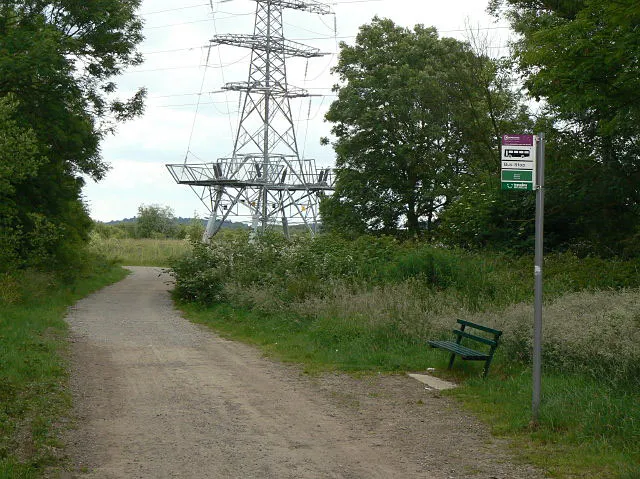
Photo: Alan Murray-Rust, CC BY-SA 2.0, via Wikimedia Commons
In the Southside neighborhoods of many mid-sized American cities, the morning commute begins long before the first bus arrives. Residents walk twenty minutes to a stop, wait another twenty for a route that runs only twice an hour, and then transfer once—sometimes twice—to reach a job center that sits just eight miles away. The journey can take ninety minutes each direction. For workers without vehicles, this is not an inconvenience. It is a defining constraint on their economic lives.
These neighborhoods exist in what researchers now call transit deserts: geographic areas where the demand for public transportation substantially outpaces the available supply. Unlike the more visible failures of transit—a delayed train, a crowded platform—transit deserts are defined by absence. There is nothing to complain about because, in many cases, there is nothing there at all.
Mapping the Gap
Urban planning researchers at universities including DePaul and the University of Minnesota have spent years developing methodologies to measure transit deserts with precision. Their findings are striking. Across dozens of U.S. metropolitan areas, low-income neighborhoods and communities of color are disproportionately likely to fall within transit desert boundaries, even when those communities sit geographically close to employment corridors and commercial centers.
The gap is not simply a matter of distance. It is also a matter of frequency, reliability, and network connectivity. A neighborhood may technically have bus service, but if that service runs only on weekday mornings and evenings, operates with 45-minute headways, and connects only to other underserved areas rather than to downtown job centers, it functions as a transit desert in practice.
Data from the American Public Transportation Association suggests that more than 45 percent of Americans have no access to public transit at all, and a significant portion of those who nominally do have access are served by networks too sparse to support car-free commuting. The implications extend well beyond inconvenience: studies consistently link poor transit access to reduced employment outcomes, higher transportation cost burdens as a share of household income, and diminished access to healthcare, education, and social services.
How Planning Decisions Compound the Problem
Transit deserts do not emerge randomly. They are shaped, in part, by the legacy of mid-twentieth century urban policy—highway construction that bisected neighborhoods, urban renewal projects that displaced dense communities, and zoning codes that spread low-density residential development across areas impossible to serve efficiently with fixed-route transit.
But legacy infrastructure is only part of the story. Contemporary planning decisions frequently reinforce these patterns. When transit agencies face budget pressure, service cuts tend to fall disproportionately on low-ridership routes—the very routes serving peripheral, lower-income neighborhoods. The logic is defensible on narrow financial grounds: cutting a route that carries 200 daily riders saves more money per rider lost than cutting a route that carries 2,000. But the cumulative effect is a network that increasingly serves those who already have options while withdrawing service from those who do not.
Algorithmic routing tools, increasingly used by transit agencies to optimize network performance, can entrench these disparities if they are calibrated primarily around ridership volume and farebox recovery rather than equity metrics. Several advocacy organizations, including TransitCenter in New York, have argued publicly that agencies must adopt explicit equity weighting in their planning models—ensuring that service allocation reflects community need rather than existing ridership patterns alone.
Voices from the Ground
For residents of transit deserts, the daily arithmetic of getting around is exhausting. In interviews conducted by urban planning researchers across cities including Houston, Cleveland, and Memphis, a consistent theme emerges: people are not passive victims of the transit gap. They build elaborate informal systems to compensate—carpooling arrangements with neighbors, staggered work schedules negotiated with employers, reliance on family members to provide rides. These systems work, until they don't. A job change, a family illness, a car breakdown can unravel months of careful logistical planning overnight.
Community organizers in several cities have begun translating this lived frustration into formal advocacy. Groups like Commuters Count in the Southeast and Ride New Orleans have developed sophisticated data collection campaigns, asking residents to log their transit experiences in ways that generate the kind of documented evidence transit agencies and city councils find harder to dismiss than anecdote alone.
Emerging Solutions: Microtransit and Beyond
The technology sector has taken notice of the transit desert problem, and the solutions being piloted across the country are varied in their ambition and effectiveness.
Microtransit—on-demand, app-dispatched shuttle services operating within defined service zones—has attracted significant investment and attention as a potential gap-filler. Operators including Via and Transloc have partnered with cities from Arlington, Texas, to Ride KC in Kansas City to deploy flexible routing services in areas where fixed-route buses are financially impractical. Early results are mixed. Some programs have demonstrated genuine ridership gains in underserved areas. Others have struggled to attract the populations they were designed to serve, often because smartphone-based booking creates barriers for residents with limited data plans or digital literacy.
First-mile and last-mile solutions—electric scooters, bike-share stations, and subsidized ride-hail credits—have also been deployed as connective tissue between transit deserts and the broader network. Their effectiveness depends heavily on physical infrastructure: a scooter share program is of limited use in a neighborhood without protected bike lanes or safe crossing infrastructure.
Perhaps the most durable solutions, however, are emerging not from venture capital but from communities themselves. Several cities have experimented with community-operated transit models, where neighborhood organizations take on partial management of route planning and vehicle operation with public subsidy. These models are administratively complex, but they produce services designed around actual community patterns rather than aggregate ridership projections.
Rethinking What Transit Is For
The transit desert problem ultimately forces a foundational question about the purpose of public transportation. If transit systems are evaluated primarily as commercial enterprises—measured by farebox recovery ratios and cost per rider—then serving low-density, low-income neighborhoods will always appear inefficient. If they are evaluated as public infrastructure, analogous to roads or water systems, the calculus changes substantially.
Several states, including California and Maryland, have begun embedding equity requirements directly into transit funding formulas, requiring agencies to demonstrate that capital and operating expenditures meet minimum thresholds of service in disadvantaged communities. These mandates are imperfect and frequently contested, but they represent a meaningful shift in how transit performance is officially defined.
For the millions of Americans currently navigating the invisible geography of transit deserts, the shift cannot come quickly enough. The morning walk to the bus stop, the ninety-minute commute, the daily negotiation with an indifferent network—these are not abstract policy problems. They are the texture of daily life, and they are, with sufficient political will and technological investment, entirely solvable.