The Dashboard and the Platform: Why Transit Technology Serves Agencies Better Than It Serves Riders
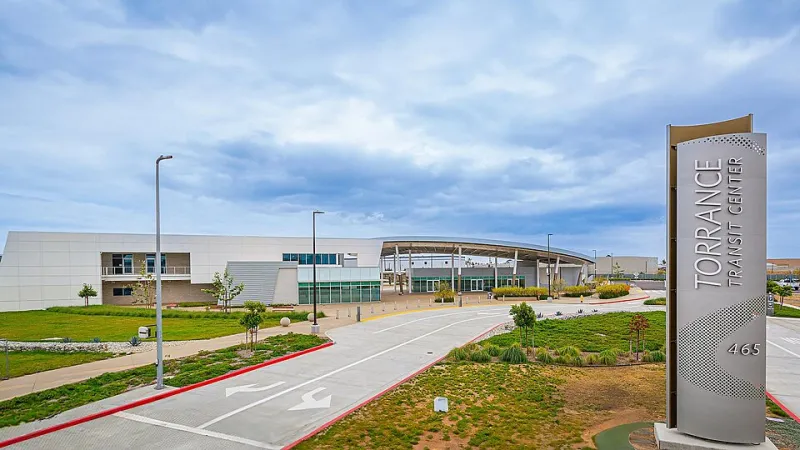
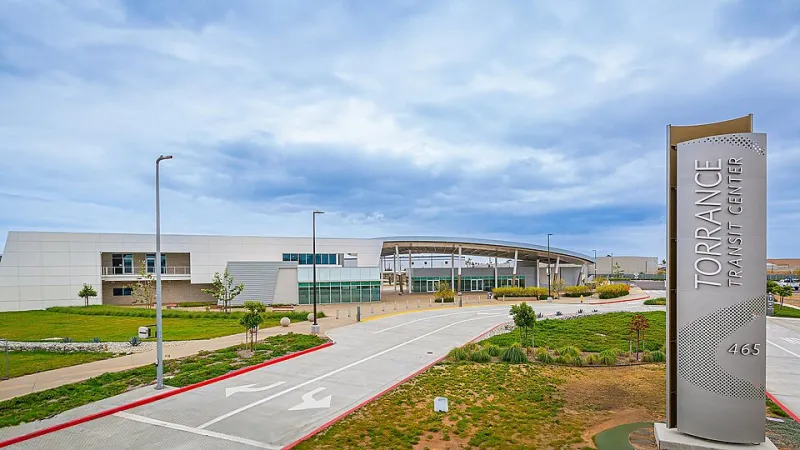
Photo: Torrance Transit, Public domain, via Wikimedia Commons
Walk into the operations center of a mid-to-large American transit agency and you will likely find something impressive: a wall of monitors displaying vehicle positions updated by the second, color-coded headway alerts, predictive models flagging bunching risks before they cascade into service gaps. The technology is real, the investment is substantial, and the people running it are, by and large, competent professionals trying to manage an extraordinarily complex system.
Then step outside and ask the commuter waiting on a wind-swept platform in Chicago or Houston or Philadelphia whether the technology is working for them. The answers tend to be considerably less flattering.
This is the central paradox of transit technology in the United States today: agencies have become genuinely sophisticated at measuring their systems, while riders have not experienced a commensurate improvement in the quality of their daily commutes. Understanding why requires looking closely at what the technology was built to do — and for whom.
Built for the Control Room
The real-time vehicle tracking systems that now operate across most major American transit networks were designed primarily as operational management tools. Automatic Vehicle Location technology, which uses GPS to report bus and rail positions to a central system, was adopted widely in the 2000s and 2010s with the explicit goal of improving schedule adherence and enabling supervisors to intervene when service patterns deteriorated.
Those goals are legitimate. Bunching — the phenomenon in which vehicles that are supposed to be evenly spaced end up traveling in clusters — is one of the most persistent and damaging problems in surface transit operations. A real-time view of vehicle positions gives dispatchers the information they need to hold a bus at a stop, short-turn a vehicle, or deploy a spare to fill a gap. That is valuable.
But the same data stream that feeds an operations dashboard is also the source of the arrival predictions displayed on rider-facing apps. And the translation from operational data to commuter-useful information is where the system frequently breaks down.
"The feed is accurate in the sense that it reflects where the vehicle is right now," explained one software developer who has built transit applications for multiple US agencies, speaking on background. "The problem is that predicting where it will be in eight minutes is a much harder problem, and most agencies are using algorithms that were not designed with the commuter use case as the primary requirement."
The Prediction Problem
Arrival time predictions in transit apps are typically generated by one of two methods: schedule-based projection (the vehicle is X minutes behind schedule, so it will arrive at your stop X minutes late) or real-time interpolation (the vehicle is Y distance away traveling at Z speed, so it will arrive in some calculated interval). Both approaches have well-documented failure modes.
Schedule-based predictions collapse when a vehicle is recovering from a delay — a bus that was running ten minutes late may accelerate through stops to regain schedule, arriving earlier than the prediction suggests. Speed-based interpolation fails in stop-heavy urban corridors where dwell time variability — how long a vehicle spends loading and unloading passengers — can swing arrival times by several minutes in either direction.
More sophisticated systems attempt to incorporate historical dwell time data and real-time passenger load information to improve predictions. A handful of agencies, including those in New York, San Francisco, and Seattle, have invested in these enhanced models with measurable improvements in prediction accuracy. But even in best-case deployments, the accuracy of real-time predictions degrades significantly beyond a five-to-seven minute horizon — precisely the window that matters most to a commuter deciding whether to leave the office or wait for the next vehicle.
Crowding Data: Known, Not Shared
Perhaps the most striking illustration of the gap between agency capability and rider experience involves passenger load information. Many transit agencies operating modern rail systems have access to weight-based or infrared-sensor-based load data that can identify, in near real-time, whether a given vehicle is at capacity. Some bus fleets equipped with automatic passenger counters generate similar information.
This data exists. It is used internally — to inform decisions about adding service on crowded lines, to satisfy federal reporting requirements, and to feed long-term planning models. What it is not used for, in most American systems, is real-time rider communication.
The contrast with peer systems in other countries is instructive. Several European and Asian transit networks display real-time crowding information on platform screens, in apps, and via in-vehicle announcements, allowing commuters to make informed decisions about whether to board an arriving vehicle or wait for the next one. In the United States, this functionality remains the exception rather than the rule, despite the underlying data often being available.
"We have the load numbers," acknowledged a transit technology manager at a large Northeastern agency, who asked not to be identified by name or agency. "Surfacing them to riders in a way that's useful requires interface work, and frankly, there's also some institutional reluctance around showing people when trains are overcrowded. It feels like advertising a failure."
That reluctance, several technology consultants noted, reflects a broader pattern: agencies are more comfortable using data internally to manage operations than exposing it externally in ways that might generate rider frustration or media scrutiny.
The Transfer Problem Nobody Has Solved
For commuters who rely on connections between routes or modes, the technology gap becomes most acute at the moment of transfer. Coordinating a bus-to-rail or bus-to-bus connection in real time is a genuinely difficult optimization problem, and most American agencies have not attempted to solve it at the operational level.
Some systems offer guaranteed connections on specific high-frequency corridors, but the concept of dynamic transfer protection — holding a connecting vehicle when real-time data shows that a feeder vehicle is close but delayed — is implemented inconsistently and rarely communicated to riders in advance. The result is that a commuter whose app shows their connecting bus departing in three minutes has no reliable way of knowing whether the agency's system is even aware that they need that connection, let alone actively managing for it.
TriMet in Portland, Oregon, and the regional transit authority in Denver have piloted transfer coordination tools with varying degrees of success. Both efforts have highlighted the same constraint: the technology to identify and act on missed-connection risks exists, but deploying it requires real-time communication between dispatchers, operators, and riders across multiple routes simultaneously — a coordination challenge that agency organizational structures were not designed to support.
Closing the Gap
The agencies making the most visible progress on the rider experience side of this equation share a common characteristic: they have explicitly defined rider outcomes — not operational metrics — as the primary design requirement for their technology investments.
That distinction matters more than it might appear. An agency that measures success by on-time performance percentage will build systems optimized for schedule adherence. An agency that measures success by commuter wait time, transfer reliability, and trip completion rate will ask different questions of its technology vendors and make different decisions about what data to surface and how.
The technology, in most cases, is not the limiting factor. Real-time data exists. Predictive modeling tools are commercially available. Rider-facing interfaces can be built and iterated quickly. What has been slower to change is the institutional framework that determines what transit technology is supposed to accomplish — and whose experience it is ultimately designed to improve.