After Midnight: The Commuters America's Transit System Was Never Built to Serve
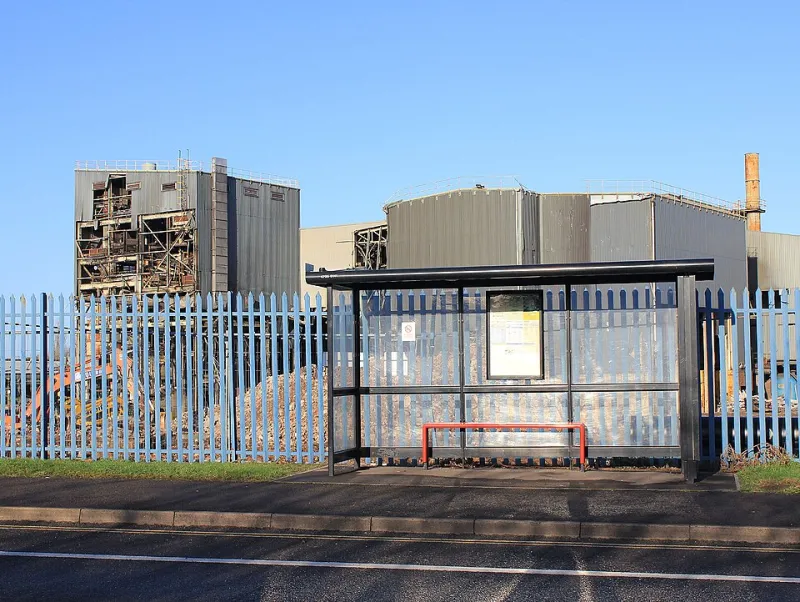
Photo: David P Howard , CC BY-SA 2.0, via Wikimedia Commons
On a Tuesday morning at 2:47 a.m., a hospital dietary aide named Marcus finishes his shift at a medical center in suburban Columbus, Ohio. The last bus on his route stopped running at 11:30 p.m. The first one won't run again until 5:15 a.m. In the hours between, he has three options: wait in a parking structure that doesn't feel safe, pay for a rideshare that will consume nearly a quarter of his night's wages, or call a family member and apologize for the hour.
Marcus's situation is not exceptional. It is, by most available measures, extraordinarily common.
A System Designed for Nine-to-Five
American public transit was largely conceived and built around a specific model of urban labor: workers who travel from residential neighborhoods to downtown employment centers in the morning and reverse that journey in the evening. The fixed-route bus network, the commuter rail timetable, the subway headway schedule—all of these were calibrated, explicitly or implicitly, to serve that pattern.
The American economy has not worked that way for decades. Healthcare alone employs more than 16 million people in the United States, a significant proportion of whom work rotating shifts, overnight hours, or schedules that begin and end at hours when most transit systems are either dormant or running skeleton service. The warehousing and logistics sector—supercharged by the growth of e-commerce—now operates distribution centers around the clock, often in suburban or exurban locations that were never well-served by transit even during peak hours.
The gig economy has added another dimension. Rideshare drivers, food delivery couriers, and app-based service workers frequently operate during late-night demand surges precisely because that is when surge pricing makes the work financially viable. The irony is acute: these workers are often providing the transportation that other late-night workers depend on, while facing the same transit access gaps themselves when their own shifts end.
"We've spent decades optimizing transit for the commute that looks good in a ridership model," says one regional transit planner who asked not to be identified by name. "The workers who don't fit that model have been subsidizing the system through their fares for years without ever really being served by it."
The Data Gap
Part of what has allowed this problem to persist is that late-night and gig workers are genuinely difficult to count. Traditional transit planning relies heavily on household travel surveys and employment data that capture commute patterns for workers with predictable, daytime schedules. Workers whose hours shift week to week, who hold multiple part-time positions, or who are classified as independent contractors rather than employees frequently fall outside the methodologies that planners use to assess demand.
The result is a compounding invisibility. Because these workers don't show up prominently in the data, they don't generate service proposals. Because there are no service proposals, they don't appear in public comment processes. Because they don't appear in public comment processes, their needs are not incorporated into long-range plans. The cycle is self-reinforcing.
Some researchers have begun using alternative data sources—anonymized cell phone mobility data, rideshare trip records, emergency room arrival logs—to reconstruct a more accurate picture of who is moving through cities at 2 a.m. and where they are trying to go. The picture that emerges is of a substantial, geographically dispersed population making trips that existing transit infrastructure is almost completely unable to accommodate.
Experiments in On-Demand Night Service
A small but growing number of transit agencies have begun treating late-night mobility as a distinct problem requiring purpose-built solutions rather than simply an extension of daytime service.
Via Transportation, a technology company that specializes in on-demand transit software, has partnered with several agencies to operate flexible-route night services that function more like shared-ride vehicles than fixed buses. Rather than following a predetermined path on a fixed schedule, these services use algorithms to dynamically route vehicles based on real-time trip requests, clustering passengers with overlapping origins and destinations. The model is significantly more cost-effective per vehicle than running near-empty fixed buses at 3 a.m., and it allows agencies to cover a broader geographic area with limited resources.
Sacramento Regional Transit piloted a version of this approach in partnership with a technology provider, focusing specifically on connections to major employment sites—hospitals, a large fulfillment center, and a hotel cluster—that generate late-night trip demand. Early results suggested meaningful ridership among workers who had previously relied entirely on personal vehicles or rideshare services. The agency has since sought to expand the program, though funding constraints remain a persistent obstacle.
In the Chicago metropolitan area, Pace Suburban Bus has operated a vanpool program for years that serves shift workers at manufacturing facilities in the western suburbs—locations where traditional bus service would be prohibitively expensive to maintain. The program is not glamorous, and it does not generate the kind of attention that a new light rail line might attract. But for the workers who use it, it represents the difference between a viable commute and an impossible one.
The Technology Layer
What makes the current moment different from previous attempts to address late-night transit gaps is the maturation of the technology infrastructure that on-demand services require. Real-time dispatch algorithms, mobile trip-booking applications, and integrated payment systems have all reached a level of reliability and affordability that makes flexible-route night service operationally feasible for agencies that could not have contemplated it fifteen years ago.
The challenge is no longer primarily technological. It is financial and political.
Federal transit funding formulas have historically rewarded ridership volume and route coverage in ways that systematically disadvantage low-frequency, off-peak services. An agency that diverts resources from a busy daytime corridor to fund an overnight on-demand program may see its federal funding metrics move in the wrong direction even if the social benefit of the reallocation is substantial. Several transit advocacy organizations have called on the Federal Transit Administration to develop funding mechanisms that better account for equity and access outcomes rather than raw ridership numbers alone.
The political dimension is equally significant. Transit boards are typically composed of elected officials or their appointees, and those officials respond to constituent pressure. Late-night workers—who are disproportionately lower-income, more likely to be people of color, and less likely to engage in formal civic processes—have historically not been a politically powerful constituency. Changing that requires deliberate outreach and, in some cases, restructuring the public engagement processes that agencies use to gather input.
A Question of Priorities
The late-night transit gap is, at its core, a question of whom a public system considers worth serving. Every transit agency in America makes resource allocation decisions that reflect, whether consciously or not, a set of assumptions about which riders matter most.
For decades, those assumptions have not included Marcus waiting in a parking structure at 2:47 a.m. The technology to serve him exists. The data to locate him and others like him is increasingly available. What remains is the institutional will to treat his commute as a problem worth solving—not as an afterthought, but as a legitimate demand that a public transit system has an obligation to meet.
The agencies beginning to experiment with on-demand night service are demonstrating that solutions are achievable within realistic budget constraints. The question is whether those experiments will remain isolated pilots or whether they will catalyze a broader rethinking of when, and for whom, American transit is designed to run.